Children pick up English in the most natural way there is
All-day immersion at roughly 90:10. And that 10% in Czech is no accident.
What it looks like in practice
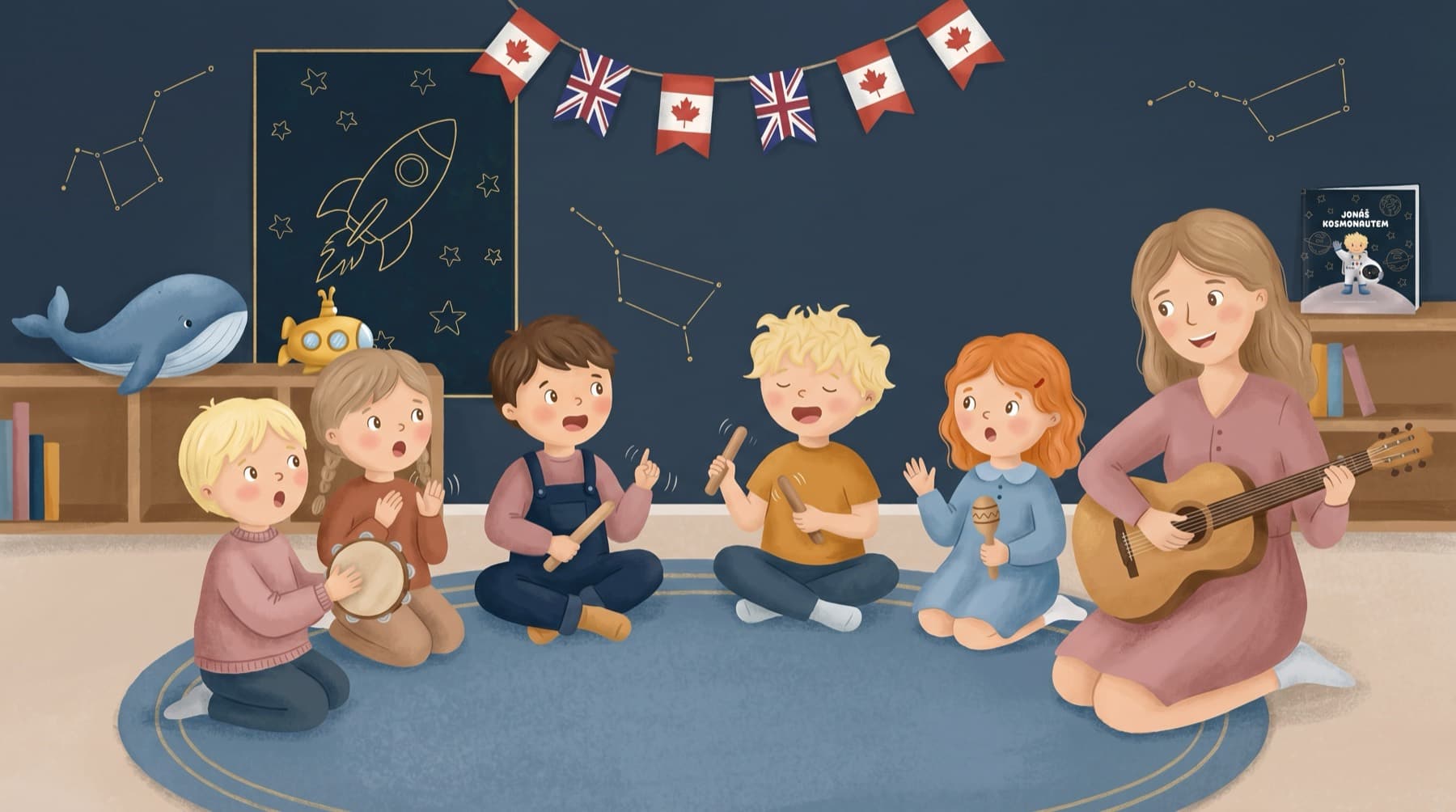
No desks, no translating. The teacher says “stand up” and stands up herself. She says “wash your hands” and heads to the sink. Children understand from context and respond with their bodies; they don't have to speak until they're ready. Song rituals hold the day together: the Hello song in the morning, the Clean Up song before cleaning up, Bye Bye Goodbye at the end of the day. The same phrases, the same situations, day after day. To an adult, it might seem monotonous. A small child's mind needs exactly that.
Why you'll hear Czech here too
We don't do one hundred percent immersion – we chose the roughly 90:10 ratio for the children's sake. When a two-year-old is sad, clearly doesn't understand something, or safety is at stake, we switch: we say it in English and then right away in Czech. A child needs the security of knowing they are understood. Without it, they learn nothing, in any language, because a stressed mind doesn't soak anything up – it just defends itself. Hardline immersion without a single word of Czech looks good on paper, but for a two-year-old it can add stress that has no place in childhood. With parents, day-to-day communication is in Czech – if you're an English-speaking family, mention it when you get in touch.
A real native speaker
Three days a week, the children are with Miss Madison, a native speaker from Canada who has been teaching English to Czech children for eight years. From her, they pick up the pronunciation and rhythm of the language. The rest of the week, our team leads the day in English – so English is heard here every single day.
What your child will gain
- An ear tuned to correct pronunciation in the years when the mind is most receptive
- Understanding, and gradually their first words, phrases, and sentences
- English as an old friend, not a subject you get tested on
- Greater empathy – children from bilingual environments are better at putting themselves in other people's shoes
- A head start on learning other languages later
What we honestly don't promise
- Better focus or a higher IQ – research hasn't confirmed either
- Fluent conversation at the age of four
You don't need to speak English. At all. You have a more important job at home – reading, chatting, and singing in your native language. We explain exactly how in the For parents section.
Want to be there when we open?
Leave us your contact info and you'll be among the first to hear when enrollment opens.
Leave us your details