No one-word “fine” at pickup. You'll know how your child is really doing.
We communicate with you regularly. Day-to-day communication takes place in Czech – if that's a hurdle for your family, tell us and we'll figure it out together.
With parents, we speak Czech: meetings, daily updates, what your child ate, how they slept, what made them laugh. English-speaking family? Mention it when you get in touch.
Report an absence from your phone before your coffee is ready
You know how it goes. Your child wakes up with a runny nose and you need to report the absence, juggle work, and hit the pharmacy all at once. Here, marking your child absent takes a minute on your phone in our online system. Reporting an illness or booking an extra day works the same way.
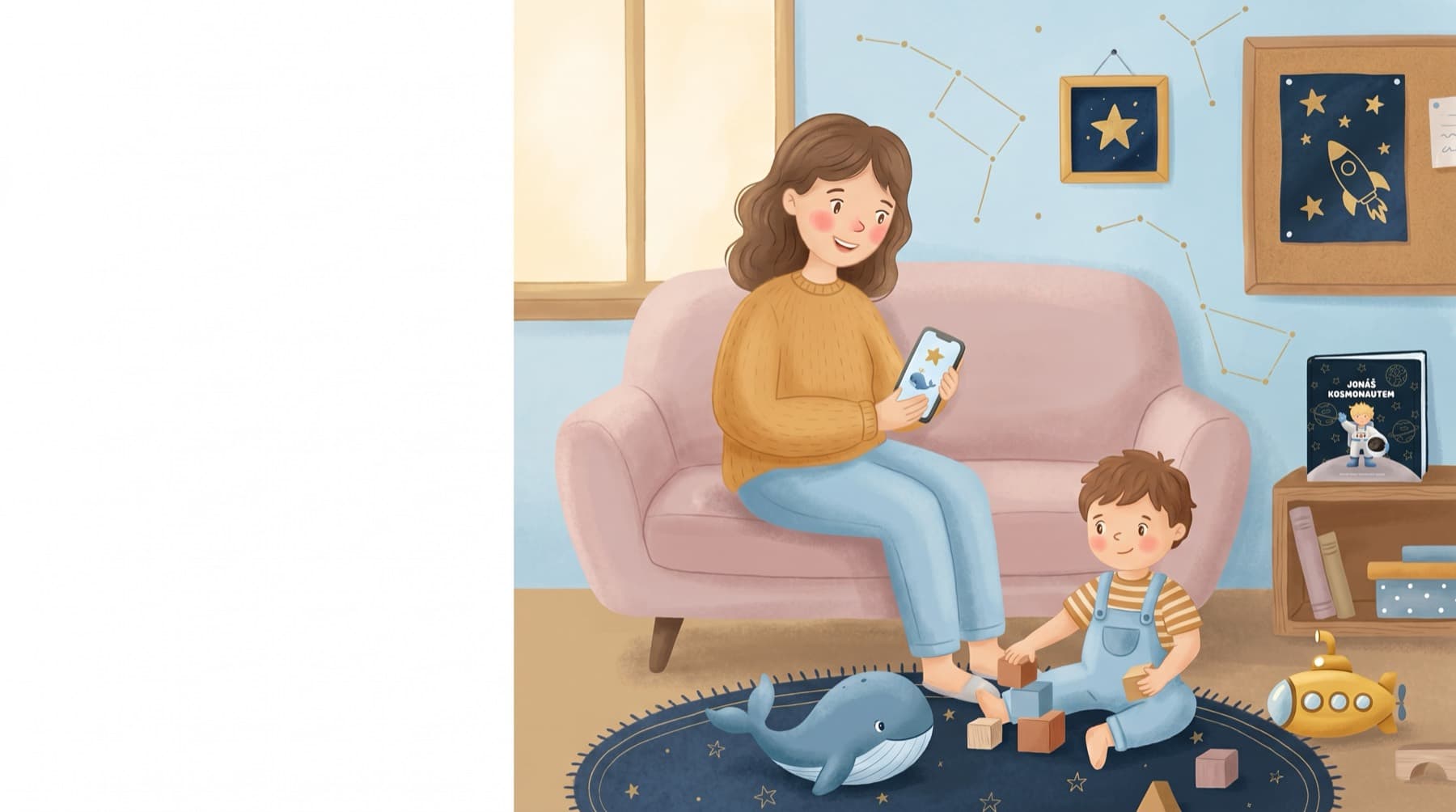
Regular reviews of your child's development
The proposed format, which we'll confirm with the team before we open:
- A short daily update: food, sleep, mood and one lovely moment from the day
- A monthly overview of the themes and activities we covered in class
- Twice a year, a written summary (speech, independence, movement, English) and a meeting to go through it
The rule behind it is simple: here, parents know how their child is doing in class. When things are going well, you'll hear about it. When they're not, you'll hear about that too – along with a suggestion for what we'll do about it together.
Monthly themes and what to do with them at home
Each month, our class focuses on a single theme: animals, weather, food. You'll get an overview plus a few tips for building on the theme at home. These are intentionally in Czech. Whatever your child understands in Czech, they simply attach a new English word to it. That way both languages grow together.
When our theme is “on the farm”, borrow a Czech book about animals from the library and read it in the evening instead of the usual bedtime story. That's all. No English flashcards, no teaching at home. No time or headspace for it? It's not required.